Trees are an important part of gardens and landscapes across Hobart and Southern Tasmania. They provide shade, shelter, privacy and habitat for wildlife. However, there are times when a tree becomes unsafe, seriously unhealthy or unsuitable for its location.
So, when does a tree need to be removed? A tree may need to be removed when it presents an unacceptable safety risk, has suffered severe structural damage, is dying or declining beyond recovery, or causes a problem that cannot be managed through appropriate pruning or other tree care.
However, not every damaged, diseased or leaning tree needs to come down. A professional assessment can help determine whether tree pruning, tree reduction or complete removal is the safest and most appropriate option.
At Matthew Clements Tree Service, we help property owners across Hobart and Southern Tasmania understand their options and make informed decisions about tree care.
1. The Tree Has Become a Safety Risk
Safety is one of the main reasons to consider tree removal. A tree with significant structural defects may pose a risk to people, homes, vehicles, fences or other property, particularly during strong winds and severe weather.
Look out for warning signs such as:
- Large dead branches above driveways, paths or outdoor living areas.
- Major cracks in the trunk or where large branches join the tree.
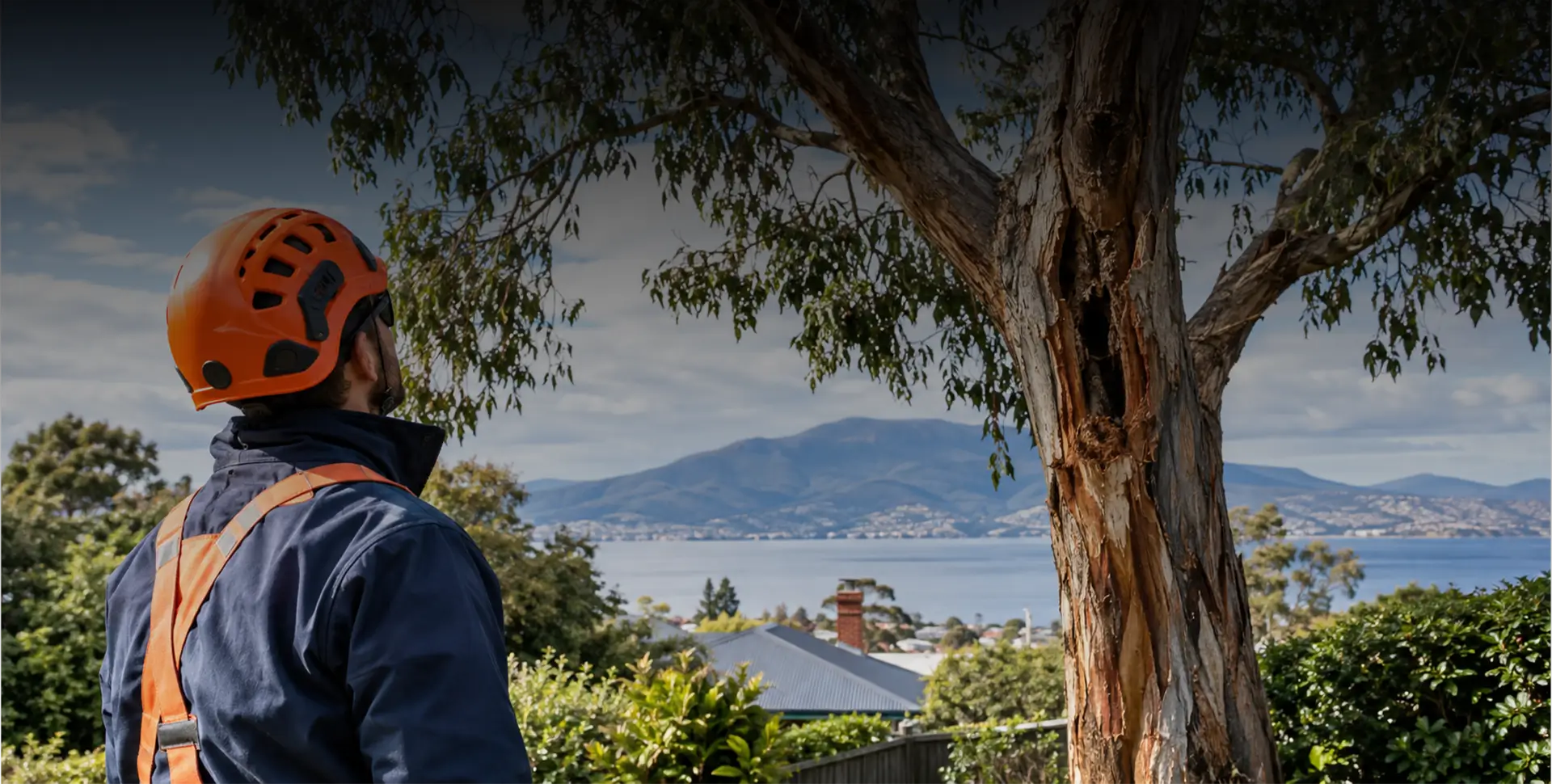
- A trunk that has split or developed a significant hollow or area of decay.
- Exposed, damaged or lifting roots.
- A tree that has recently started leaning or has shifted in the ground.
- Large branches that appear to be breaking away from the main trunk.
These signs do not automatically mean a tree must be removed. Some trees can remain safely in place with appropriate pruning, monitoring or other management measures. However, a qualified arborist should assess concerning defects, especially when people or valuable property could be affected.
If a tree appears unstable or has suffered storm damage, keep people away from the affected area and arrange a professional assessment. If it threatens a building or public area, take the risk seriously rather than waiting for the next storm.
2. The Tree Is Dead or Dying
Dead trees can become brittle and lose branches as their structure deteriorates. Depending on their condition and location, they may eventually pose a risk to nearby people and property.
Signs that a tree may be dead or in serious decline include:
- Little or no new growth during the normal growing season.
- Extensive dead branches throughout the canopy.
- Large sections of missing bark or significant trunk damage.
- Fungal growth around the trunk or base.
- Extensive dieback affecting several major limbs.
- A deteriorating root system or damage around the base.
Remember that some trees naturally lose their leaves during autumn and winter. In Tasmania, deciduous trees may look bare for several months without being unhealthy. Therefore, assess seasonal changes alongside other symptoms before deciding that a tree is dying.
Similarly, mushrooms or other fungal growth near a tree can indicate decaying wood or roots, but they do not establish the extent of the problem on their own.
An arborist can assess the tree’s health, structural condition and likely future performance. If the tree has extensive irreversible decline and presents an unacceptable risk, removal may be the most appropriate option.
3. The Tree Has Significant Storm Damage
Tasmanian weather can bring strong winds, heavy rain and storms that damage trees and their root systems. A tree that appeared healthy before a storm may develop serious structural problems afterwards.
Following severe weather, check your property for:
- Broken or hanging branches.
- A split trunk or damaged major branch unions.
- Roots lifting out of the soil.
- A tree that has suddenly developed a new lean.
- Branches resting on a roof, shed or fence.
- Significant damage to the main stem.
Some storm-damaged trees can recover with careful pruning. Others may have sustained damage that makes them unsafe to retain.
Do not attempt to cut large hanging branches or dismantle a damaged tree yourself. Trees under tension can move unpredictably, while damaged trunks and root plates may fail without warning. Stay clear of the area and contact a professional arborist.
Safe Work Australia provides guidance on managing the risks associated with tree trimming and removal work, including work involving chainsaws, tree climbing and falling branches.
4. Disease or Decay Has Seriously Affected the Tree
Trees can experience fungal infections, root decay, pest damage and other health problems. While many tree health issues can be managed, severe decay or extensive structural damage may make removal necessary.
An arborist will consider the type and extent of the damage, the tree’s overall condition, the likelihood of failure and what lies within falling distance.
For example, a tree with a small area of deadwood in an otherwise healthy canopy may only need targeted pruning. In contrast, extensive decay affecting a major structural part of a tree beside a frequently used driveway may require more significant intervention.
The important distinction is that a diseased tree does not always need to be removed. The decision should depend on the tree’s condition and the level of risk, rather than the presence of a single symptom.
Where practical, preserving a healthy tree through appropriate care is often preferable to removing it unnecessarily.
5. The Tree Is Causing Damage That Cannot Be Managed Another Way
Tree roots, branches and expanding trunks can sometimes interfere with buildings, drainage systems, paving, retaining structures or other infrastructure.
Common concerns include:
- Roots contributing to damage around paths, driveways or retaining walls.
- Branches repeatedly contacting a roof or obstructing access.
- A tree interfering with infrastructure or utility assets.
- Growth that creates persistent clearance problems.
- Damage that continues despite suitable pruning or other management.
However, roots near a house or a branch overhanging a roof do not automatically justify removing the entire tree. Before making a decision, determine the cause of the damage and whether a less drastic solution will work.
Depending on the circumstances, options may include selective pruning, crown reduction, root management carried out with appropriate professional advice, or changes to nearby structures.
If removal appears necessary, seek advice before cutting roots or making major changes to the tree. Unplanned root cutting can destabilise a tree and increase the risk of failure.
6. The Tree Has Outgrown Its Location
Sometimes a tree was planted in a space that could not accommodate its mature size. Years later, it may crowd a building, block essential access, interfere with services or require repeated heavy pruning.
In some cases, professional tree shaping or tree reduction can improve clearance and manage the canopy while retaining the tree.
However, repeated attempts to force a large tree into an unsuitable space may not provide a safe or sustainable long-term solution. If the tree cannot be managed appropriately in its current location, removal and replacement with a more suitable species may be worth considering.
When choosing a replacement tree, consider its mature height and spread, root characteristics, local growing conditions and proximity to buildings and services. Selecting the right tree for the space can prevent similar problems in the future.
7. Can Pruning Save the Tree?
Before deciding on tree removal, it is worth asking whether appropriate pruning could address the problem.
Tree pruning can remove dead or damaged branches, improve clearance and manage selected structural issues. Tree reduction can also help manage a canopy where a reduction is suitable for the species and the tree’s condition.
However, pruning cannot correct every problem. It may not resolve severe root instability, extensive structural decay or a badly compromised trunk. Excessive pruning can also damage a tree and leave it with a weaker structure.
A professional assessment helps determine whether pruning, tree reduction, ongoing monitoring or complete removal is the most appropriate course of action.
At Matthew Clements Tree Service, we consider the tree’s condition, its surroundings and the work required to manage it safely before recommending a suitable approach.
8. Do You Need Council Approval to Remove a Tree in Tasmania?
Before removing a tree in Hobart or elsewhere in Southern Tasmania, check whether planning approval or another form of permission is required.
You should not assume that a tree can be removed simply because it is on your property or appears dangerous. Requirements vary according to the property, the tree’s location and the applicable planning controls.
For example, Tasmanian councils identify circumstances in which tree removal may be restricted, including:
- Trees protected under a local planning scheme.
- Vegetation within a priority vegetation area.
- Properties affected by heritage controls.
- Covenants, permit conditions or other restrictions.
- Trees affected by other environmental or land-management legislation.
The City of Hobart’s requirements should be checked for properties within its municipal area. Other councils across Southern Tasmania may have different planning provisions.
For example, West Tamar Council’s tree management guidance advises property owners to contact Council before removing trees because approval may be required, including in some situations involving diseased trees or fire risks. The Break O’Day Council planning guidance also explains that a qualified assessment may be required for certain tree removals.
If a tree presents an immediate danger, seek urgent professional advice and contact the relevant council to establish what requirements apply. Do not assume that an emergency automatically removes all approval requirements.
Checking first can help you avoid unnecessary delays, unexpected costs or potential breaches of planning controls.
9. Why You Should Get a Professional Arborist Assessment
It can be difficult to judge a tree’s condition by looking at its canopy alone. Important defects may be hidden within the trunk, beneath the soil or where major branches connect.
A professional assessment can help establish:
- Whether the tree has significant structural defects.
- Whether the tree presents an unacceptable risk in its location.
- Whether pruning or another management option is practical.
- Whether removal is the most appropriate recommendation.
- Whether further investigation or documentation is needed.
Arboriculture Australia outlines recognised tree risk assessment approaches used in Australia and New Zealand. These approaches consider factors such as the likelihood of tree or branch failure, the chance of that failure affecting a target, and the consequences if it does.
This is important because a tree should not be removed solely because it is large, old or imperfect. The aim is to make a reasoned decision that considers safety, tree health, the surrounding environment and the benefits of retaining the tree.
Frequently Asked Questions
When should a dangerous tree be removed?
A tree may need urgent removal when it has serious structural defects and presents an unacceptable risk that cannot be managed adequately through pruning or other measures. If the tree is leaning suddenly, has lifted roots or has a split trunk, keep clear and arrange a professional assessment.
Does a dead tree always need to be removed?
Not necessarily. Its location, condition and likelihood of affecting people or property all matter. A dead tree in a remote part of a property may be managed differently from one beside a house or driveway. In some circumstances, a suitable dead tree may also provide valuable wildlife habitat, provided its risks can be managed.
Can I remove a tree on my property in Hobart?
It depends on the property and the applicable planning controls. Check with the City of Hobart or your local council before arranging removal, particularly if the tree is native vegetation, protected, heritage-related or subject to a planning condition.
Should I remove a tree that is leaning?
Not automatically. Some trees grow at an angle without being unstable. However, a new or increasing lean, particularly when accompanied by cracked soil, lifting roots or recent storm damage, warrants urgent assessment.
Is tree removal better than tree reduction?
Neither option is always better. Tree reduction may be suitable when the tree can be retained safely with appropriate pruning. Removal may be necessary when serious defects or other problems cannot be managed adequately. An arborist can help determine which option best suits the circumstances.
What should I do if a tree is damaged during a storm?
Keep people away from the affected area and avoid touching hanging branches or attempting to cut a damaged tree. Contact a professional arborist for an assessment. If the tree threatens power lines, stay well clear and contact the relevant electricity network operator.
Need Advice About Tree Removal in Hobart?
If you are concerned about a dead, damaged, diseased or unstable tree, professional advice can help you understand the risks and decide what to do next.
Matthew Clements Tree Service provides tree removal, tree pruning and tree reduction services across Greater Hobart and Southern Tasmania. We can help you assess your tree’s condition and determine the most appropriate way to manage it.
Concerned about a tree on your property? Contact Matthew Clements Tree Service to discuss your situation and arrange an assessment.